- Licensed & insuredCertificates provided to every client
- Open 24/7Emergency calls, no night or weekend fee
- 2-year labor warrantyOn new roofs, plus manufacturer warranty
- Free written estimatesPhotos of every problem we find
Key facts
- Systems: TPO, EPDM, modified bitumen (torch-down and cold-applied), roof coatings and metal roofing.
- Services: roof replacement, repair, coatings and maintenance, inspections and reports.
- Clients: owners, tenants, facility managers, HOA and condo boards and property managers.
- Insurance: licensed and insured; we can name your company or board as additional insured on our certificate, usually within 1 day.
- Code: replacements need a building permit from the local town, city or village, and usually must meet current energy-code insulation levels.
Commercial roof systems we work with
"Flat" roofs are never truly flat. A commercial roof needs a slight slope (often built in with tapered insulation) so water reaches drains or scuppers within a day or two of rain. Above that sits the waterproofing membrane. Each membrane type has strengths:
| System | How it is installed | Strengths | Watch-outs |
|---|---|---|---|
| TPO (thermoplastic polyolefin) | Single-ply sheets, mechanically fastened or adhered, seams hot-air welded | White, reflective surface lowers cooling load; welded seams | Seam quality depends on the welder and the weather on install day |
| EPDM (synthetic rubber) | Large sheets, adhered, fastened or ballasted; taped seams | Proven, flexible in cold, few seams on big roofs | Seam tape and flashings are the weak points as it ages |
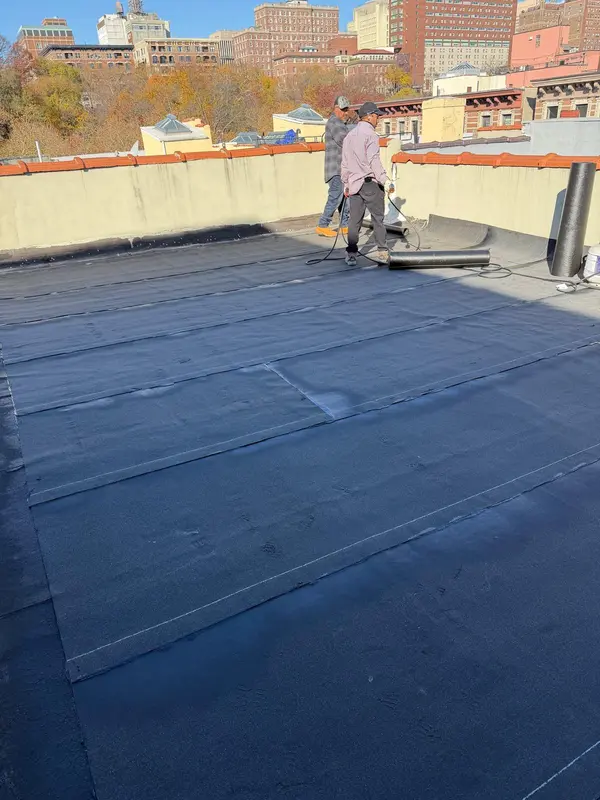
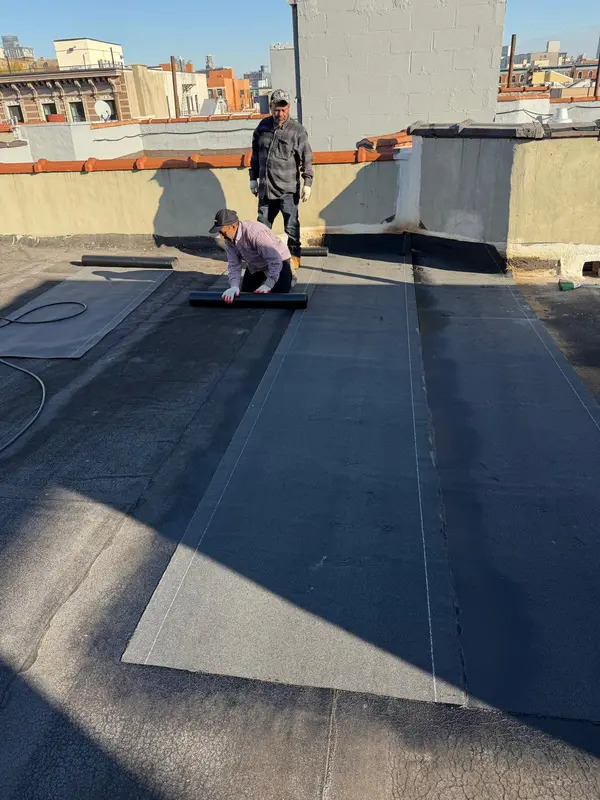
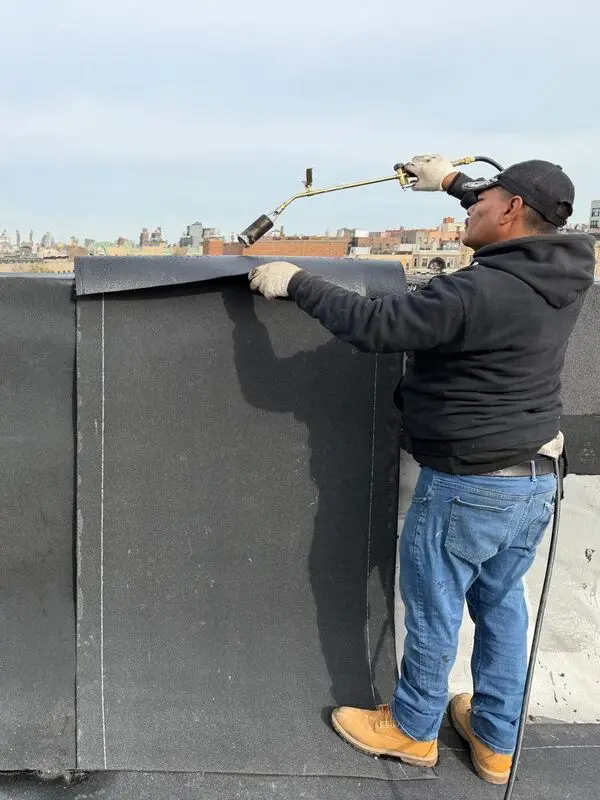
| Modified bitumen | Multi-ply: base sheet plus a granulated or coated cap sheet, torched or cold-applied | Tough, puncture resistant, good for foot traffic and smaller roofs | Torch work needs strict fire safety; seams must be fully bonded |
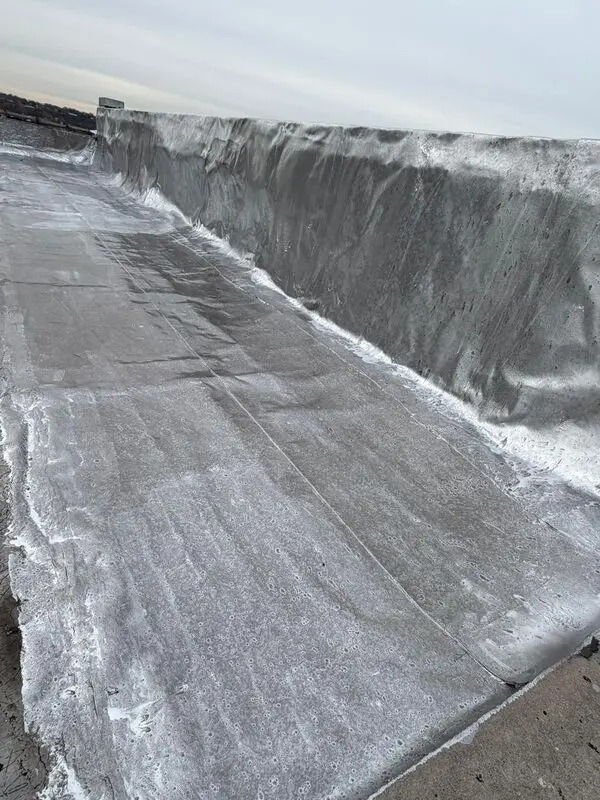
| Roof coatings | Liquid-applied silicone, acrylic or aluminum over a sound existing roof | Can add years to a roof that is aged but dry, at lower cost than replacement | Not for wet insulation or failing roofs |
| Metal | Standing seam or through-fastened panels on a structural slope | Long life, low maintenance | Needs adequate slope; fasteners and laps on older panels leak. See our commercial metal roof guide |
Not sure which you have, or which you need? Our flat roofing guide compares TPO, EPDM and modified bitumen in more depth.
Commercial roofing services
Commercial roof replacement
Tear-off or recover, new insulation and drainage, membrane and flashing, planned around your tenants.
ReplacementRepair, coatings & maintenance
Leak repair, inspections, drain and flashing work, and coatings that extend roof life.
Repair & maintenanceHOA, condo & property managers
Multi-building roofing programs, bid-ready scopes and reports a board can vote on.
For boards & managersInspections & condition reports
For purchases, leases, insurance and capital planning, with photos and priorities.
InspectionsBuildings we roof
Nassau County's commercial building stock is mostly low-rise: one- and two-story retail along corridors like Hempstead Turnpike, Sunrise Highway, Jericho Turnpike and Old Country Road; office and medical buildings around Garden City, Mineola and Lake Success; light industrial and warehouse space in places like Hicksville, Bethpage and Westbury; and garden apartments and co-op buildings throughout the county. Each brings its own priorities:
- Retail and restaurants: grease and exhaust around kitchen fans, rooftop units, and work scheduled around opening hours.
- Offices and medical: tenants who cannot tolerate leaks or fumes, and coordination with HVAC contractors.
- Warehouses: large roof areas where drainage and insulation choices drive cost.
- Multifamily, co-ops and condos: residents below, board approvals and phased budgets.
- Houses of worship and schools: mixed roof types, steep and flat sections, and tight summer windows.
How commercial roof projects are planned
Survey the roof
Measurements, drainage, rooftop equipment, existing layers (core cuts where needed) and moisture in the insulation.
Choose the system
Repair, coat, recover or replace, compared on cost per year of roof life, not just the upfront price.
Written scope and price
Membrane, insulation and R-value, tapered layout, flashing details, drains, edge metal, warranty and schedule.
Permits and logistics
Building permit, any equipment disconnects with your HVAC contractor, crane or hoist, dumpster placement and tenant notices.
Install, inspect, close out
Daily dry-in, final inspection, photos and warranty documents for your files.
Insulation and the energy code
When a commercial roof is replaced down to the deck, the New York State energy code generally requires the new roof to meet current insulation levels for climate zone 4, which covers Long Island. That usually means a thicker layer of insulation above the deck than the roof being removed. It adds cost, but it also cuts heating and cooling bills for the life of the roof, and tapered insulation that fixes drainage counts toward it. A recover or coating over an existing roof is treated differently, which is one reason the right choice depends on the building.
We work across all of Nassau County: the Towns of Hempstead, North Hempstead and Oyster Bay and the Cities of Glen Cove and Long Beach. See our service areas or read how we work.
Frequently asked questions
What roof systems do commercial buildings in Nassau County usually have?
Most low-slope commercial roofs here are one of four types: modified bitumen (torch-down or cold-applied), EPDM rubber, TPO single-ply, or an older built-up tar-and-gravel roof. Some warehouses and newer buildings have metal panel roofs. The right replacement depends on the building, the deck, rooftop traffic and the budget, not on habit.
Can you work while my business stays open?
In most cases, yes. Commercial roof work is planned around operations: staging and crane lifts outside business hours, tear-off in sections that are dried in the same day, protected entrances and, for torch work, fire-watch procedures. We agree the schedule and the access plan before work starts.
Do commercial roofing contractors need a Nassau County license?
Nassau County's home improvement license covers work on residential property. Commercial work is governed mainly by the building permit and code requirements of the town, city or village, plus insurance and safety rules. For mixed-use buildings with apartments, ask your contractor how licensing applies to your property.
How often should a commercial roof be inspected?
Twice a year, typically in spring and fall, and after any major storm. Regular inspections catch open seams, blocked drains and failed flashing while they are cheap to fix, and many manufacturer warranties require the owner to maintain the roof.