- Licensed & insuredCertificates provided to every client
- Open 24/7Emergency calls, no night or weekend fee
- 2-year labor warrantyOn new roofs, plus manufacturer warranty
- Free written estimatesPhotos of every problem we find
Key facts
- Options: full tear-off to the deck, or a recover over a dry existing roof where code allows.
- Systems: TPO, EPDM, modified bitumen; metal where the structure has slope.
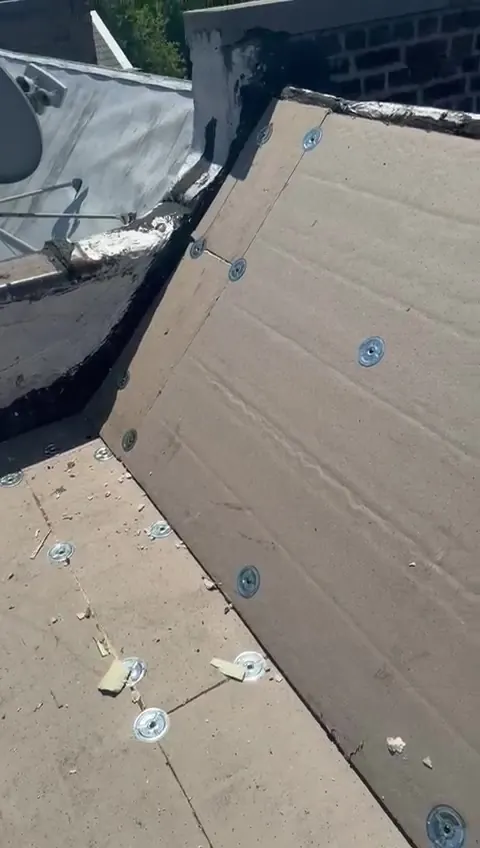
- Includes: insulation, tapered drainage, cover board, membrane, flashing at walls, curbs and penetrations, drains and edge metal.
- Permit: required from the local building department for a replacement.
Tear-off or recover?
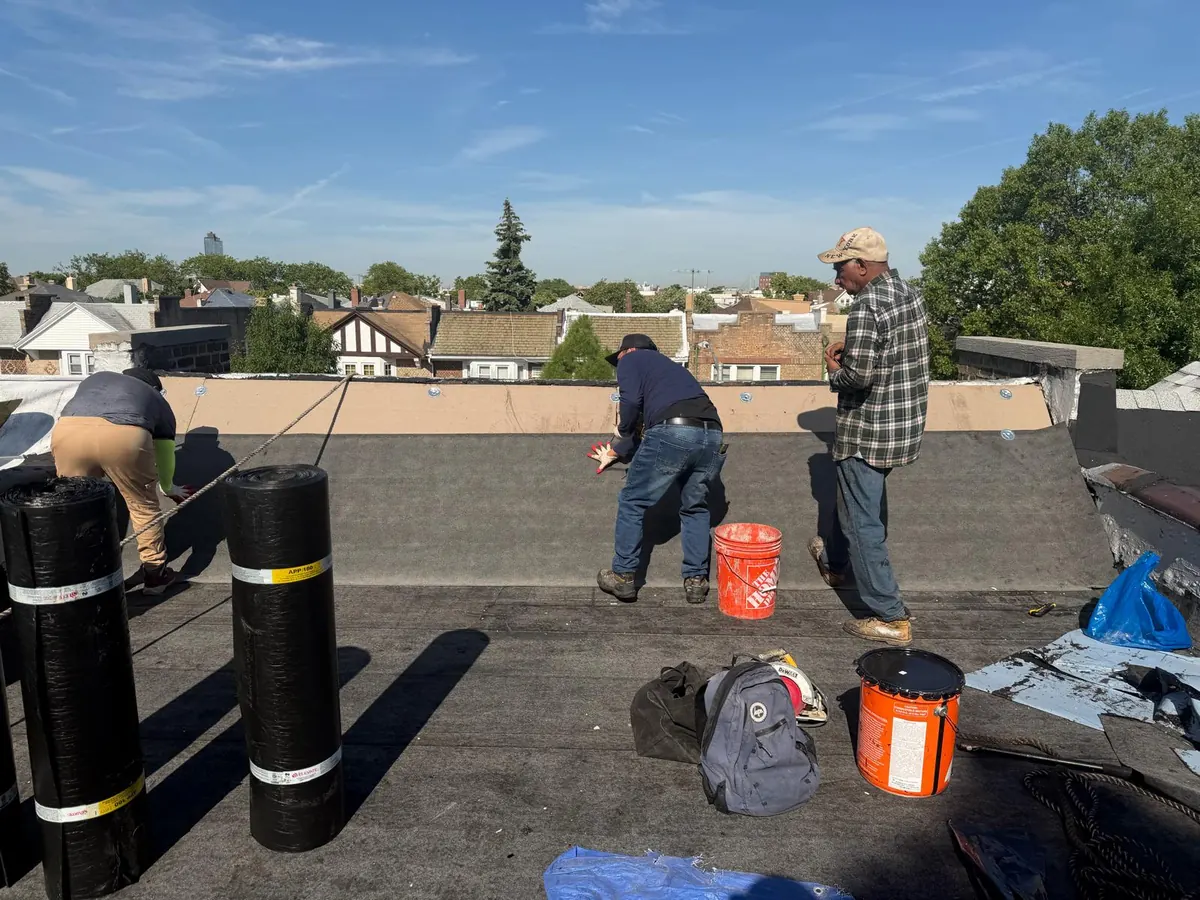
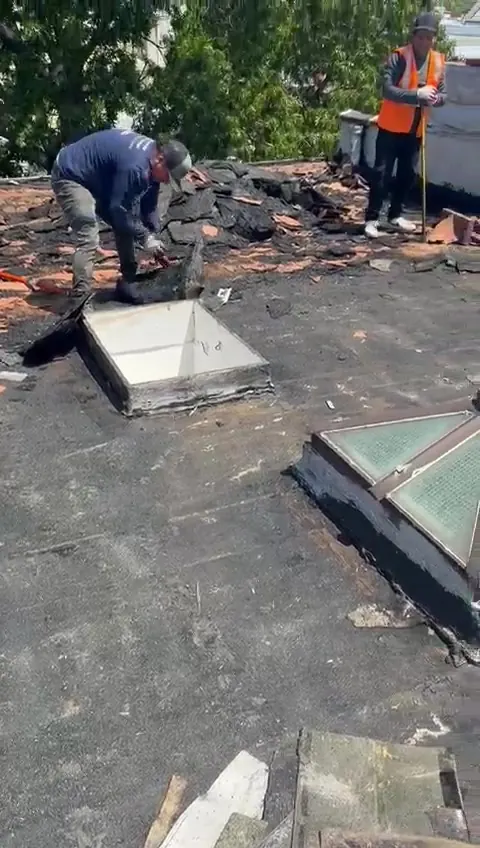
The first decision on any commercial roof replacement is whether the old roof comes off. Building codes generally prohibit a recover when the existing roof is water-soaked or deteriorated, or when there are already two or more layers of roofing. Beyond the code, the question is whether the existing insulation is dry and solid enough to build on.
| Full tear-off | Recover | |
|---|---|---|
| When it fits | Wet insulation, multiple layers, deck problems, drainage that needs rebuilding | One existing layer, dry insulation, sound deck |
| Upfront cost | Higher (removal and disposal) | Lower |
| Deck inspection | Full: rusted metal deck or rotted wood is repaired | None, beyond test cuts |
| Insulation | New, at current energy-code levels, with tapered slope | Existing insulation stays; cover board on top |
| Risk | Weather exposure during tear-off, managed by daily dry-in | Hidden moisture trapped under the new roof if the survey was wrong |
We base the recommendation on test cuts or a moisture survey, not on the cheaper number.
What a commercial roof replacement scope should spell out
- Removal of existing layers (or recover method) and disposal
- Deck repair allowance: metal deck replacement or wood deck replacement per square foot
- Insulation type, thickness and R-value, and the tapered layout to drains or scuppers
- Cover board, membrane type and thickness, attachment method
- Base flashing height at parapets and curbs, counterflashing and coping
- Drains, scuppers, leaders and overflow provisions
- Edge metal and gutters
- Equipment curbs, pipe supports and walkway pads where there is maintenance traffic
- Manufacturer and contractor warranty terms, and owner maintenance obligations
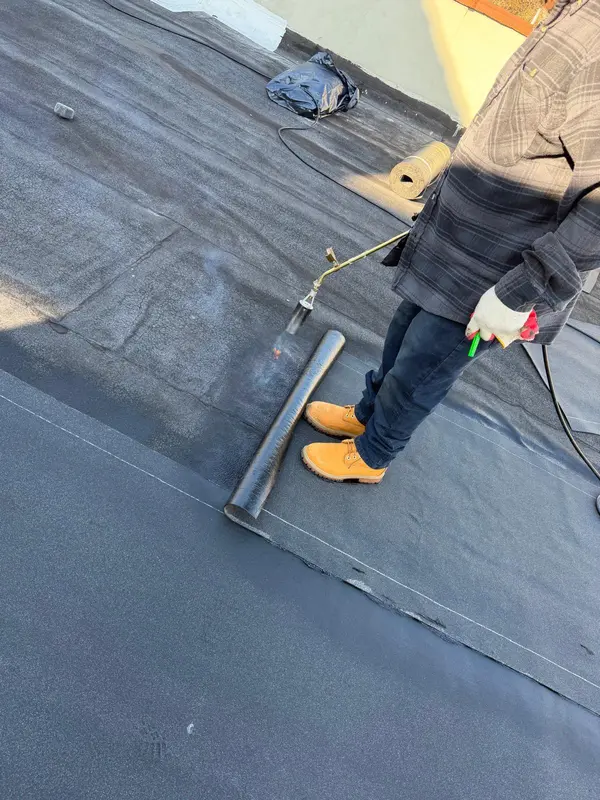
- Schedule, working hours, staging, crane lifts and fire-safety plan for torch work
Choosing the new system
For most Nassau County commercial roofs the choice comes down to TPO, EPDM or modified bitumen. TPO's white surface reduces summer cooling load, which matters on single-story retail and offices where the roof is most of the building's exposed surface. EPDM is forgiving on large, simple roofs. Modified bitumen stands up best to foot traffic and is easy to detail on small, busy roofs crowded with equipment. Metal is an option where the structure already has slope, or where a new framed slope makes sense.
Fixing drainage once and for all
Water that sits on a roof for more than about two days after rain (ponding) shortens membrane life, adds weight and finds every weakness. A replacement is the moment to fix it: tapered insulation that creates slope to drains, crickets that push water away from the high side of curbs and walls, and additional drains or scuppers where the existing ones cannot keep up. Look for these details in any proposal.
Keeping your business running
Most commercial roof replacements in Nassau County happen over occupied space. For condo, co-op and HOA properties with residents below, see how we run association roofing projects. We plan for it: tear-off only as much as can be made watertight the same day, protected entrances and walkways, noisy work and crane lifts timed with you, coordination with tenants and HVAC contractors, and a fire watch after torch work on modified bitumen systems.
Planning ahead? See typical commercial and residential roofing costs, or request a site visit and we will survey the roof and prepare a written proposal.
We work across all of Nassau County: the Towns of Hempstead, North Hempstead and Oyster Bay and the Cities of Glen Cove and Long Beach. See our service areas or read how we work.
Frequently asked questions
When does a commercial roof need replacing instead of repair?
When wet insulation covers a large share of the roof, when leaks keep returning in different places, when seams are failing across the field rather than in one spot, or when the membrane is past its expected life and repair costs are rising each year. A moisture survey or core cuts show how much of the insulation is wet, which is often the deciding factor.
What is a roof recover, and is it allowed?
A recover installs a new membrane, usually over a cover board, on top of the existing roof without tearing it off. Building codes generally do not allow it where the existing roof is water-soaked or deteriorated, or where there are already two or more roof layers. Where it is allowed and the existing insulation is dry, it can save tear-off and disposal cost.
How long does a commercial roof replacement take?
It depends on the size and access. A small retail roof of a few thousand square feet may take several days; a large warehouse roof can take weeks. Weather, crane access, equipment that has to be lifted and tenant restrictions all affect the schedule, which is agreed in writing before work starts.
Do we have to move rooftop HVAC units for a new roof?
Often they have to be raised or disconnected briefly so the new insulation and membrane can run under or around them correctly, and curbs may need to be extended to keep the right flashing height above the new roof surface. We coordinate with your mechanical contractor so equipment downtime is short and scheduled.