- Licensed & insuredCertificates provided to every client
- Open 24/7Emergency calls, no night or weekend fee
- 2-year labor warrantyOn new roofs, plus manufacturer warranty
- Free written estimatesPhotos of every problem we find
Key facts
- What it is: removing the old roof covering down to the deck, repairing the deck, and installing a new roof system: drip edge, ice barrier, underlayment, flashing, ventilation and the finished covering.
- When you need it: leaks in more than one place, worn or curling shingles across whole slopes, soft decking, or a roof in the last years of its expected life.
- Permit: a full replacement usually needs a building permit from your town, city or village. See the permit guide.
- Warranty: a 2-year labor warranty on every new roof we install, plus the manufacturer's material warranty of up to 20 years.
- Cost: driven by roof size, pitch, layers to remove, deck repairs and material. See roof replacement cost in Nassau County.
What a complete roof replacement includes
Two quotes for "a new roof" can describe very different jobs. The difference is in the layers you never see once the job is done. A full replacement on a Nassau County home should cover all of the following, in writing:
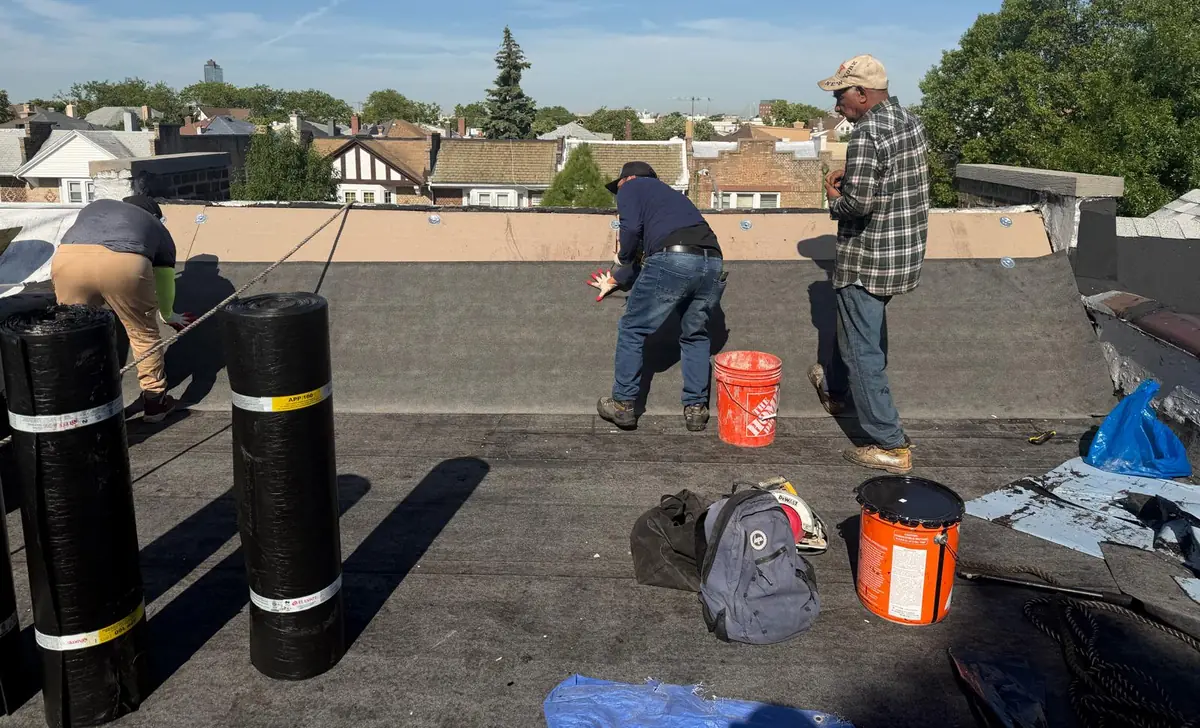
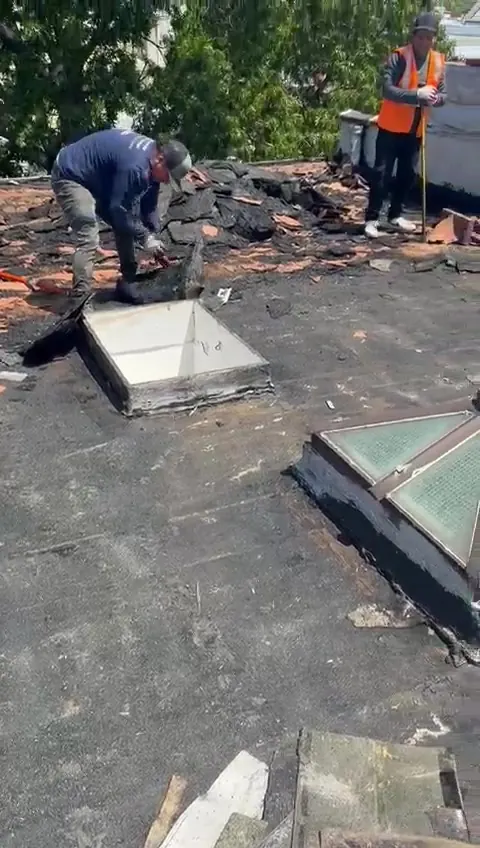
- Tear-off to the deck. Every old layer comes off, so the deck can be inspected. Old flashing and rusted nails go with it.
- Deck inspection and repair. Soft, delaminated or rotted plywood or plank boards are replaced. Fasteners are re-set where the deck has loosened.
- Drip edge at eaves and rakes, so water is thrown into the gutter instead of wicking back into the fascia.
- Ice-and-water membrane along the eaves, in valleys and around chimneys, skylights and walls. This self-adhering layer is what stops ice-dam backup and wind-driven rain.
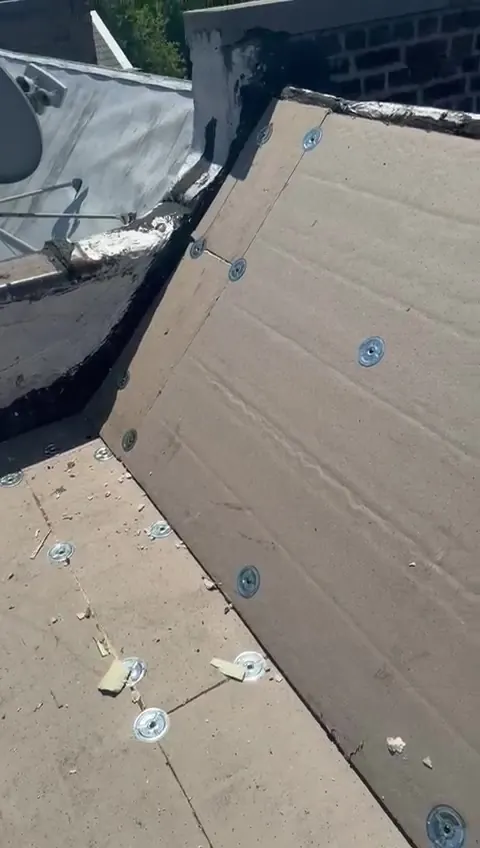
- Synthetic underlayment over the rest of the deck as a second line of defense.
- New flashing: step flashing where roof meets wall, chimney flashing and counterflashing, pipe boots and vent flashing. Reusing tired flashing under a new roof is the most common cause of "new roof, same leak".
- Balanced ventilation: intake at the soffits and exhaust at the ridge, sized to the attic. Poor ventilation cooks shingles from below and feeds ice dams in winter.
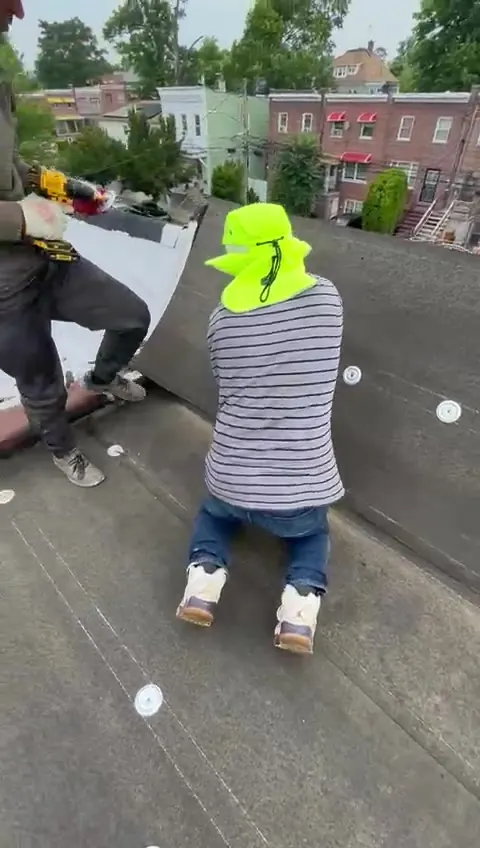
- The roof covering you chose, installed to the manufacturer's instructions so the warranty is valid.
- Cleanup: debris removed, gutters cleared of grit and a magnetic sweep of the yard and driveway for nails.
Tear-off or roof-over?
Laying new shingles over old ones is cheaper up front, and some contractors still offer it. New York's residential code (the 2025 Residential Code of New York State, which took effect on December 31, 2025) carries the same rule found in the national model code: a roof recover is not allowed where there are already two or more layers, where the existing roof is water-soaked or deteriorated, or over slate, clay or cement tile.
Even when one layer could legally be covered, we usually advise against it. A roof-over hides the deck, so rot keeps spreading. It adds weight, it shortens the life of the new shingles because they sit on an uneven, heat-holding base, and it makes it impossible to install ice-and-water membrane at the eaves, which is exactly where Long Island roofs leak in a hard winter.
Signs your roof needs replacing, not repairing
- The roof is in the last quarter of its expected life (for architectural asphalt shingles that is often around year 20 or later).
- Shingles are curling, cupping or cracked across whole slopes, not just one spot.
- Bare patches where the granules have worn off, and granules piling up in the gutters.
- Leaks or stains in more than one room, or leaks that come back after repair.
- The deck feels spongy underfoot, or the roofline sags between rafters.
- Daylight or water stains on the underside of the deck when you look from the attic.
- Many old patches, mismatched shingles and tarred-over flashing from previous repairs.
If only one of these applies, the roof may simply need a repair. Our roof repair page has a decision chart that helps you tell the difference.
Choosing the new roof covering
Most Nassau County houses are re-roofed with architectural asphalt shingles, and for good reason: they are affordable, wind-rated, available in many colors and easy to repair. But the right choice depends on the house, the budget and how long you plan to stay.
| Roof covering | Best for | Trade-offs |
|---|---|---|
| Architectural asphalt shingles | Most homes; best value | Shortest life of the pitched options |
| Standing seam metal | Long life, high wind, low maintenance | Higher upfront cost; needs a specialist crew |
| Natural slate | Historic and high-end homes | Heavy and expensive; framing must carry it |
| Clay or concrete tile | Mediterranean and Spanish-style houses | Heavy; tiles crack if walked on carelessly |
| TPO, EPDM or modified bitumen | Flat or low-slope sections, dormers, extensions | Not for pitched roofs; details must be perfect |
Skylights, ventilation and gutters during a replacement
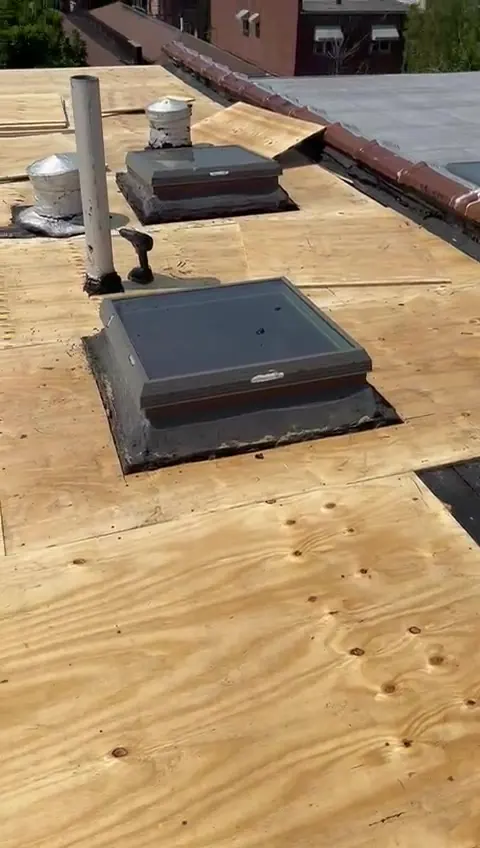
A roof replacement is the cheapest moment to deal with everything that passes through the roof. Skylights more than about 20 years old are usually replaced along with the roof, because a new roof around an old, fogged or leaking skylight is a weak point waiting to fail. Curb-mounted units on flat roofs get new curbs and flashing.
Roof ventilation is corrected at the same time: adding a ridge vent, opening blocked soffits, or replacing tired box vents and fan units. In Nassau County's humid summers, an under-ventilated attic can run far hotter than the outside air, which ages shingles and drives up cooling bills.
If your gutters or siding are also due, doing them right after the roof avoids a second round of ladders and disruption. Mention it when you book so the estimate can account for it.
What to expect on installation day
A dumpster or trailer arrives first, usually in the driveway. The crew protects shrubs, windows and the AC unit with tarps, then tears off one section at a time. By the end of each day the roof is watertight, either finished or dried in with underlayment. Expect noise and some vibration through the top floor; nails may fall into the attic. On the last day we clean up, run magnets over the lawn and driveway and walk the job with you.
We take care of the permit paperwork. Payment is simple: half when work starts, half when it is finished. After the work, the building department may need to inspect before the permit is closed. Keep the contract, the permit sign-off and the warranty registration together: a buyer's attorney or your insurer may ask for them later.
We work across all of Nassau County: the Towns of Hempstead, North Hempstead and Oyster Bay and the Cities of Glen Cove and Long Beach. See our service areas or read how we work.
Frequently asked questions
How long does a roof replacement take on a typical Nassau County house?
Most single-family homes take one to three working days once materials are on site: one day for a simple ranch or Cape, two or three for a larger colonial with dormers, valleys and a chimney. Slate, tile and metal take longer. Rain stops tear-off, so we only open a roof we can dry in the same day.
Can new shingles go over my old roof instead of tearing it off?
Sometimes, but rarely the best choice. The New York residential code does not allow a recover when there are already two or more layers, when the existing roof is water-soaked or deteriorated, or over slate, clay or cement tile. Even where a single-layer recover is allowed, you lose the chance to inspect and repair the deck and to install ice-and-water membrane at the eaves, so we recommend a full tear-off.
What happens if rotted wood is found after the old roof comes off?
You will not know how much decking is bad until it is exposed, so a good estimate states up front how rotted sheathing is handled: usually a price per sheet of plywood or a fixed allowance. We photograph the damaged area before we replace it so you can see exactly what you are paying for.
Do I need to be home during the roof replacement?
No, as long as we can reach the driveway, an outdoor outlet and the attic if ventilation work is planned. Many owners prefer to be out during tear-off because it is loud. Move cars out of the driveway, take fragile items off walls on the top floor and keep pets inside or away.
Will a new roof help when I sell my house?
A roof near the end of its life is one of the first things a buyer's home inspector flags, and it often becomes a price reduction or a repair credit. A recent replacement with its permit closed out and the warranty paperwork in hand removes that objection. We do not promise a resale value, but an old roof almost always costs the seller something.